
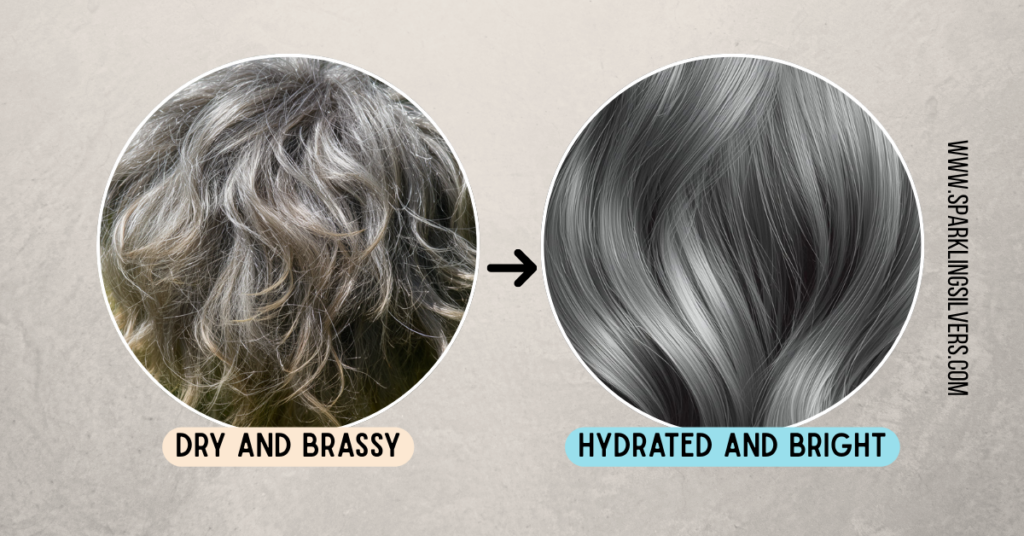
My Personal Experience
I’ve always been someone who oils her hair before every wash. It’s just something I’ve done for years because my hair has always loved it.
A few months ago, though, I developed a very itchy scalp. While treating it, my dermatologist asked me to stop oiling my hair for a while so the treatment could work properly. It was the right advice for my scalp at that time, so I followed it.
But as the weeks passed, I noticed my hair changing and not in a good way.
My gray hair became incredibly dry. It was much frizzier than usual, and I was also dealing with severe hair fall, which made my hair feel thinner than ever. The texture completely changed. My hair felt rough, looked dull, and just didn’t have that shine anymore. I also started noticing more brassiness than I normally do.
Once my scalp had healed, after discussing it with my dermatologist and considering how my hair was responding, I decided to gradually reintroduce pre-oiling and slowly brought pre-shampoo oiling back into my routine using extra virgin olive oil, an oil my hair has always responded well to. Around the same time, I washed my hair once with the Minimalist Anti-Dandruff Shampoo (3.5% Salicylic Acid) to give my scalp a good cleanse.
Within a couple of weeks, I noticed a huge difference.
The biggest change wasn’t the color; it was how my hair felt.
It was softer, smoother, and so much less frizzy.
And then I noticed something I wasn’t expecting.
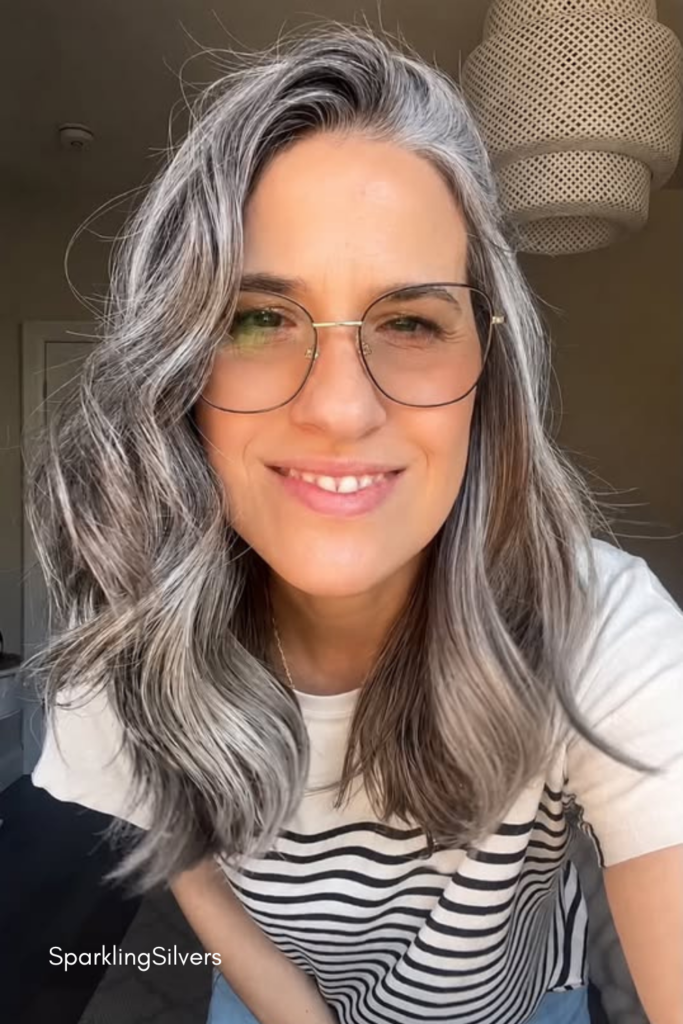
My silver hair looked brighter.
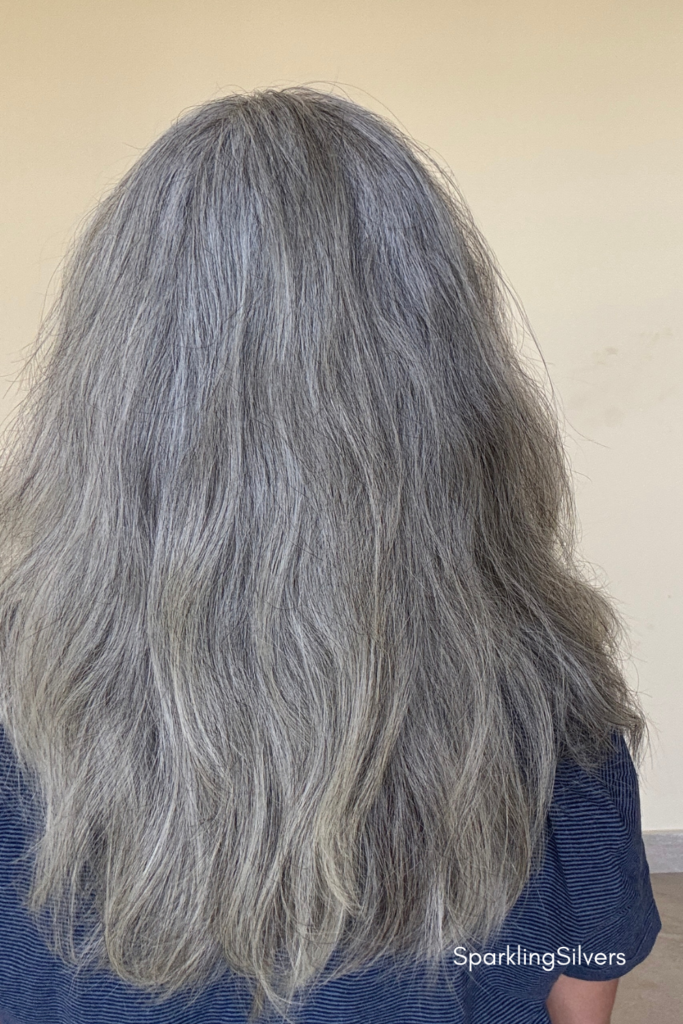
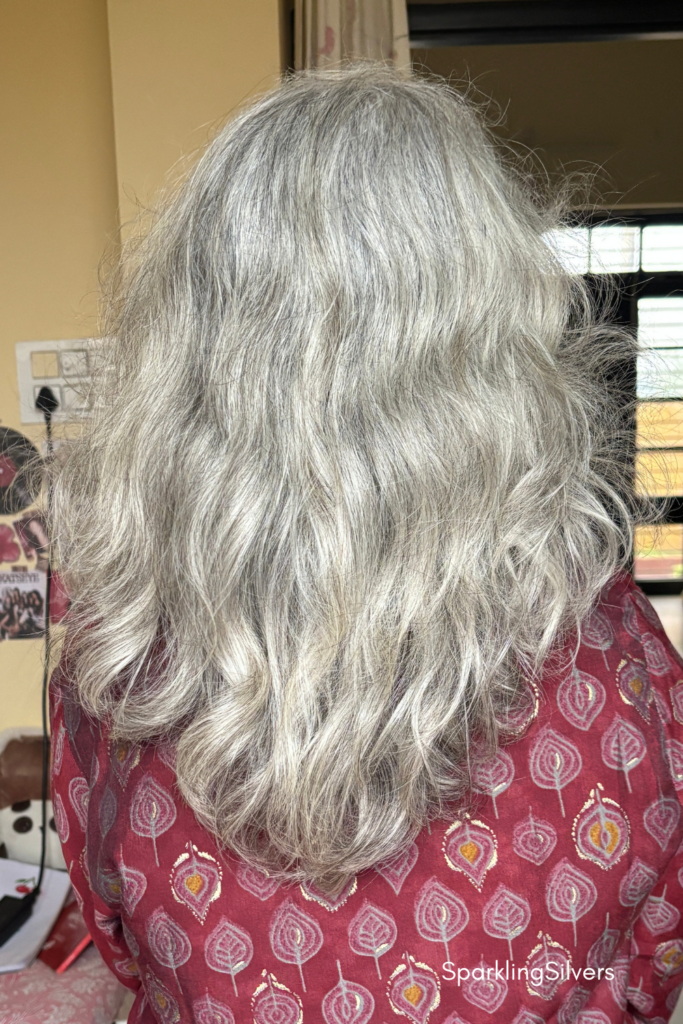
The yellowish, dull appearance that had been bothering me seemed much less noticeable.
At first, I thought maybe the anti-dandruff shampoo had somehow removed the brassiness. But the more I looked at my hair, the more I realized the real change wasn’t in the pigment—it was in the condition of my hair.
That made me wonder…
How much of what we call “brassiness” is actually the result of dry, frizzy, dehydrated gray hair that isn’t reflecting light well?
I’m not saying olive oil removes yellow tones from gray hair; it doesn’t. And I’m definitely not suggesting that everyone should oil their scalp, especially if they’re dealing with a scalp condition. In my case, I only started oiling again after my treatment was over.
What this experience taught me, though, is something I think we often overlook.
Before reaching for another purple shampoo or toner, it might be worth asking whether your gray hair is simply crying out for moisture.
Well-hydrated gray hair reflects light better, is less brassy, and naturally looks brighter. Sometimes, improving the condition of your hair can make just as much of a difference as trying to correct its color.
Why Would Hydration Affect Brassiness? The Science Bit
This actually made me curious enough to look into why this would even happen.
I’m no hair scientist, but after doing a bit of reading, something started to make sense.
Gray hair doesn’t have pigment anymore, and that’s also one of the reasons our strands can feel coarser than they used to.
And rough hair, whether it’s gray or not, doesn’t reflect light in the same way smooth hair does. Instead, the light gets scattered. I think that explains the dullness, at least.
But what I hadn’t really separated in my head before was that dull and yellow are not the same thing.
My hair probably wasn’t picking up more yellow just because it had become drier.
Whatever warmth was already there — from water, sun, products, whatever — was probably always there.
It just became more noticeable once my hair lost some of the shine that usually balances it out.
When the hair is smooth, it reflects light better and gives that cooler, brighter appearance, so the warm tones don’t stand out as much.
But take that shine away, and suddenly the yellow looks much louder than it actually is.
The Moment It Made Me Rethink Brassiness:
As I kept looking at my hair over the next few days, one question kept coming back to me.
Was my hair really less brassy… or was it simply healthier?
The more I thought about it, the more I realized that I hadn’t changed anything designed to tone yellow hair. I hadn’t reached for a purple shampoo or a purple mask. Instead, I had focused on improving the condition of my hair.
That made me look at my gray hair from a completely different perspective.
Maybe I was seeing the difference between healthy gray hair and dehydrated gray hair.
When my hair was dry, frizzy and rough, my silver looked dull and lacked shine.
When my hair became softer, smoother and better hydrated, it reflected light differently. The silver looked cleaner, brighter and far more vibrant.
That doesn’t mean every case of brassiness is caused by dryness. Hard water, chlorine, UV exposure and product buildup can all leave gray hair looking yellow.
But my experience made me realize that before trying to correct the colour of gray hair, we should first make sure the hair itself is healthy.
Sometimes, brighter gray hair isn’t about adding another toning product.
Sometimes it’s about giving your silver hair what it has been asking for all along—moisture.
The Secret to Hydrated Gray Hair:
Some products, like conditioners and deep conditioning masks, add much-needed moisture back into dry gray hair. Others, like pre-shampoo oiling and leave-in conditioners or serums, help protect that moisture so your hair doesn’t dry out as quickly.
The real secret is doing both.
These are the four habits that have made the biggest difference in keeping my gray hair healthy and hydrated.
1. Pre-Shampoo Oiling: Protect Your Hair Before You Wash It:
Many people believe that oiling hydrates the hair, but that’s not actually what it does. Instead, think of it as a way to protect your hair before you wash it.
Gray hair is naturally drier, and shampooing, especially with a clarifying or sulfate-based shampoo, can leave it feeling even drier, rougher, and more prone to frizz. That’s where pre-shampoo oiling comes in.
Applying a small amount of oil about 30 minutes to a few hours before washing helps create a protective layer over your hair. This reduces friction during shampooing, helps minimize protein loss, and prevents your hair from becoming overly dry after washing.
I like to focus the oil on my mid-lengths and ends, where my gray hair needs the most moisture protection. Then, after shampooing, I follow up with a moisturizing conditioner.
It’s a simple routine, but it’s made a huge difference.
2. Condition Your Hair the Right Way:
Most of us apply conditioner the same way: we rub it between our palms and smooth it over our hair. But over the years, I’ve found that how you apply your conditioner can make a surprising difference.
After shampooing, I squeeze a little conditioner onto the bristles of my wet detangling brush and gently brush it through my hair. This simple trick helps distribute the conditioner more evenly, so every strand gets coated.
One more thing: don’t rush to rinse it out. Leave your conditioner on for at least 3 minutes. Those few extra minutes give the conditioning ingredients time to soften your hair and smooth the cuticle.
3. Apply a Leave-In Product to Damp Hair After Every Wash:
After washing your hair, gently squeeze out the excess water with a microfiber towel or a soft cotton T-shirt. While your hair is still damp, apply a leave-in conditioner, lightweight hair cream, or serum to your mid-lengths and ends.
A good leave-in product helps reduce frizz, adds shine, and forms a lightweight protective layer that slows moisture loss while shielding your hair from humidity, pollution, and heat styling.
If you’re skipping this step, you’re missing one of the easiest ways to keep your gray hair looking healthy, hydrated, and polished throughout the day.
Related Post: The Ultimate Guide to the Best Leave-In Conditioner for Gray Hair
4. Treat Your Hair to a Weekly Deep Conditioning Mask:
A deep conditioning mask is the next step to give your gray hair an extra dose of moisture. It is like a weekly reset for dry, thirsty strands.
Once a week, after shampooing, apply the mask from your mid-lengths to the ends, making sure every strand is evenly coated. Cover your hair with a shower cap while the mask is on. The gentle warmth helps leave your hair feeling softer and smoother. Leave it on for 10–20 minutes (or as directed on the product) before rinsing thoroughly.
My New Gray Hair Philosophy:
For years, whenever my gray hair started looking a little yellow, my first instinct was to think, “I need a purple shampoo.”
This experience made me realize that I had been looking at brassiness as a colour problem, when, in my case, it may have been just as much a hair-health problem.
When my hair was at its driest and frizziest, it also looked its dullest.
As my hair became softer and better hydrated, the silver seemed to come back to life.
I’ve followed thousands of women embracing their natural gray hair, and the ones whose hair always catches my eye aren’t necessarily the ones using the most purple shampoo. They’re the ones with healthy, well-moisturized hair. Their silver looks bright, vibrant and luminous, yet it rarely appears overly brassy.
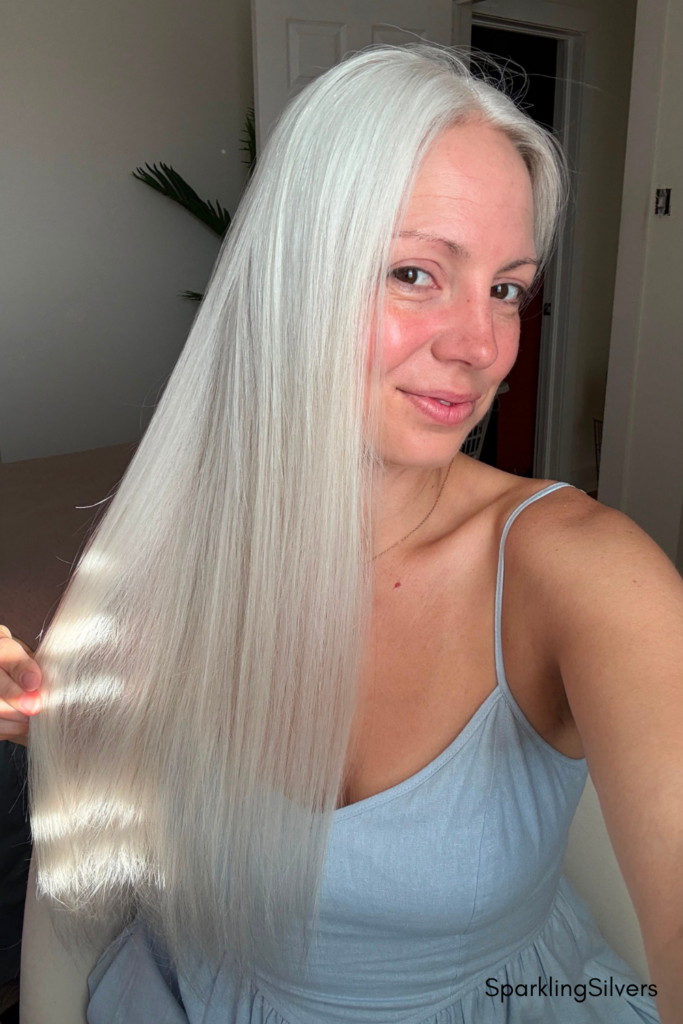
That doesn’t mean I’ll stop using purple shampoo altogether. If my hair picks up yellow tones from hard water, chlorine, or sun exposure, I’ll still reach for it.
But from now on, hydration will come first.
Because if my gray hair isn’t healthy, no toning product can make it look its best.
Now I’m curious…
Have you ever mistaken dry, dehydrated gray hair for brassiness?
I’d love to know if you’ve noticed a difference after improving your hair’s moisture or reducing frizz. Share your experience in the comments!