

I’ve been using silicone-based hair products for as long as I can remember, probably since childhood, without ever questioning it. But once I went gray, I started hearing all this noise: “Silicones damage gray hair.” “Never use silicones on silver hair.” And like many of you, I got scared.
So I did what felt like the “right” thing. I switched everything. My shampoo, my conditioner, and even my serum became silicone-free.
But my hair hated it. The shine disappeared. My hair felt dry, rough, and broke more easily. Touching it? No chance. It literally felt like straw. And I remember thinking, Is this really what healthy gray hair is supposed to feel like?
So these are the changes I noticed in my gray hair when I ditched silicones:
My hair started feeling drier and rougher.
Gray hair already lacks natural moisture, and once I stopped using silicones, I really felt the difference. Without that smoothing and sealing layer, my hair started to feel coarse and straw-like, especially on humid days or when the weather turned cold.
Frizz and flyaways became more noticeable.
Without that light protective layer from silicones, my hair reacted more to the air around me. Keeping it looking neat and polished suddenly felt like a challenge.
I lost some of the shine.
My gray hair started looking more matte and dull, even though I was conditioning it well. It just didn’t have that soft glow anymore.
Detangling and styling felt harder.
Brushing my hair wasn’t as easy. There was more tugging, more snapping, and I had to be extra careful every time I styled it.
I started hesitating to use heat on my hair.
This was a big moment for me. Most non-silicone heat protectants didn’t feel strong enough, and I found myself second-guessing blow-drying or using heat tools at all. Gray hair is already delicate, and I didn’t want to risk damage without feeling truly protected.
My hair needed much more moisture care.
Going silicone-free meant hydration had to do all the work. I relied heavily on deep conditioners, leave-ins, and oils just to keep my hair feeling okay.
This taught me something important. My gray hair needed more than just moisture; it needed protection and ease too. Silicones gave me that.
So I slowly switched back to products with silicones, and almost immediately, my hair felt smoother, softer, and alive again. The shine came back, the texture improved, and I actually enjoyed touching my hair.
Silicones themselves aren’t harmful to gray hair, but when they’re misused or overused, they can lead to a few common issues.
“This page contains affiliate links. If you click one of the product links, I’ll receive a commission. No additional charges for you!”
Here are the major consequences people usually notice on gray hair, explained simply and honestly:
Silicone buildup that leaves gray hair feeling dry and dull:
It’s important to clear one thing up here. If you think silicones are the only ingredients that create buildup, that’s not quite true.
Many non-silicone products do the same thing. Heavy oils, butters, waxes, and even some “natural” ingredients can also form a layer on the hair and lead to buildup if they’re layered too often without proper cleansing.
The difference is this: silicones are predictable and manageable. They smooth hair, reduce friction, and protect gray strands as long as they’re used in balance.
Dull or yellowed gray hair:
One of the most frustrating things about gray hair is when it suddenly starts looking dull or worse, a little yellow, and your first thought is, “It must be the silicones.” I’ve been there too. But more often than not, silicones aren’t the real reason.
What’s actually happening is that layers of products, pollution from the air, hard water, and daily styling residue slowly settle on the hair and just… stay there.
Over time, that buildup acts like a film, muting the natural brightness of gray and silver strands. The hair loses its sparkle, not because it’s unhealthy, but because it’s literally being weighed down by residue.
Hair looks flat or weighed down:
Gray hair can sometimes look like it’s lost its life, no bounce, no movement, just sitting there. And when that happens, it’s easy to think something is wrong with your hair. But in many cases, the issue is much simpler: there’s just too much product sitting on it.
It’s not damaged, it’s just overloaded. Gray hair, especially finer textures, needs support, not weight. Once you realize this, it becomes easier to adjust how much you’re using and let your hair move naturally again.
The Solution to all the above problems–
Clarifying your hair so silicones work for your gray hair, not against it:
When silicones start causing things like dullness, flat roots, or that dry, coated feeling, it’s easy to think, “Okay, silicones have stopped working for me.” But most of the time, it’s simply your hair saying, “I need a reset.”
When all of the products, pollution, and even hard water minerals pile up, your hair can’t breathe or respond to products the way it should.
That’s where clarifying comes in. If you use silicone-containing products, clarifying isn’t optional; it’s how you keep them working beautifully. The good news? You don’t need anything complicated.
You can clarify your hair in two effective ways, depending on what kind of buildup your gray hair is dealing with.
1. Clarifying or chelating shampoo (the silicone-friendly approach):
I like to give my hair a clarifying shampoo every now and then. It just helps get rid of any buildup, so my hair actually feels light and responds to new products instead of feeling weighed down. Most of the time, this is enough.
But if clarifying shampoo doesn’t fully fix the problem, especially if your gray hair still looks dull or feels coated, the buildup might be coming from hard water minerals like calcium and magnesium. In that case, a chelating shampoo works better because it’s designed to remove mineral deposits along with silicone residue.
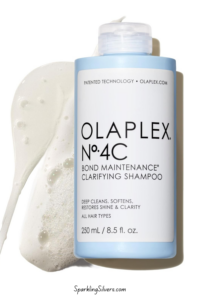
Olaplex No. 4C Bond Maintenance Clarifying Shampoo combines the functions of both a clarifying shampoo and a chelating-style cleanse — giving you two deep-cleaning benefits in one premium product.

2. Clarifying naturally while still using silicones:
If you prefer a natural route, you can still clarify your hair effectively without giving up silicone-based products.
One of my favorites is an apple cider vinegar (ACV) rinse; it’s gentle, removes residue, and brings back shine to my gray hair. I’ve shared a full blog post on how I do this safely.
Please read it here: ACV Rinse for Healthy and Shiny Silver Hair
Another option is the baking soda + shampoo method, which can help lift stubborn buildup from silicones and other products when used occasionally. I’ve explained this method step by step on my YouTube channel as well.
Here is the post: The Only Baking Soda Recipe You Need for Grey Hair
Never skip deep conditioning after clarifying:
After any clarifying session, I always follow up with a deep conditioning treatment. A good deep conditioner restores moisture, softness, and elasticity, so my gray hair feels nourished again. Without this step, all the effort of clarifying can leave hair looking flat or feeling rough.
No matter which method you choose, clarifying allows silicones to do what they’re meant to do: smooth, protect, and enhance gray hair, not weigh it down. Always follow with a deep conditioning treatment to keep your hair hydrated before you return to your regular hair routine.
Eva NYC Therapy Session Deep Conditioning Hair Mask is a great deep conditioner choice for gray hair. It’s packed with jojoba oil and argan oil, both of which are rich in nourishing fatty acids that help restore moisture and shine without weighing hair down. Vitamin B5 (panthenol) to lock in hydration and improve elasticity, making hair more resilient and smooth.

The real issue isn’t silicones themselves, but how they’re used and whether you’re clarifying your hair when needed. When used mindfully, silicones can be a great tool in gray hair care. And when they’re not needed, it’s okay to skip them.
————–FAQs—————
Should I avoid silicones if I have gray hair?
No, you don’t have to avoid silicones just because you have gray hair. Silicones aren’t bad; they were introduced into hair care to make hair easier to manage by adding smoothness, shine, and protection. For many people, especially those with dry or coarse gray hair, they can be very helpful.
Do silicones turn gray hair yellow?
No, silicones do not turn gray hair yellow. Silicones themselves are colorless and don’t cause discoloration. What can make gray hair look yellow or dull is buildup from products (silicone or non-silicone), pollution, hard water minerals, or heat styling residue sitting on the hair for too long. Regular clarifying or chelating treatments keep gray hair bright and prevent a yellowed look.
Do silicones make gray hair frizzy over time?
No, silicones don’t make gray hair frizzy over time. In fact, they usually do the opposite: they smooth the hair cuticle, reduce friction, and control frizz.
If gray hair starts feeling frizzy after using silicones, it’s usually due to buildup or a lack of moisture, not the silicones themselves. Occasionally clarifying and making sure the hair is well-hydrated help keep silicones working properly and frizz under control.
Is dimethicone bad for gray hair?
No, dimethicone is not bad for gray hair. It helps smooth rough texture, reduce frizz, add shine, and protect gray hair from heat and damage.
The only issue is buildup—not damage—which can be managed with occasional clarifying. Used correctly, dimethicone can actually make gray hair look and feel healthier.
Which silicones are best for gray hair?
Here are some silicones that generally work well for gray hair, explained in simple terms:
1. Dimethicone: Great at smoothing and reducing frizz, especially useful for coarse or wiry gray hair.
Why it’s good: Adds softness and shine without feeling too heavy.
2. Cyclopentasiloxane: Lightweight and silky, it helps hair feel smooth without weighing it down.
Best for: Fine or thinning gray hair.
3. Amodimethicone: A targeted silicone that sticks more to damaged areas and less to healthy parts.
Good for: Hair that needs smoothing but not heavy buildup.
4. Cyclomethicone + Dimethicone blend: This combo gives smoothness with a lighter feel—great balance.
Best for: Everyday styling without heaviness.
5. Water-soluble silicones (like PEG/PPG variants): Easier to wash out and less likely to build up.
Best for: Anyone who wants less buildup and easier cleansing.
Are water-soluble silicones better for gray hair?
Yes, water-soluble silicones are often a good option for gray hair because they rinse out more easily and are less likely to build up. They feel lighter, work well for fine or thinning gray hair, and don’t usually require frequent clarifying. That said, they’re not automatically better; coarser or very dry gray hair may still benefit from heavier silicones. The best choice is the one that keeps your hair healthy and manageable.
Are silicones good for heat protection on gray hair?
Silicone-based heat protectants offer the strongest heat protection because silicones coat the hair shaft and act as a physical barrier between your hair and high temperatures. Many non-silicone heat protectants rely on oils or polymers that don’t shield hair as effectively at high temperatures. This matters more for fragile gray hair.
How often should gray hair be clarified?
Only when your hair asks for it. Over-clarifying can make gray hair feel worse. The goal is balance, not frequent stripping.
How to use silicone products on gray hair properly?
This is how my routine works:
1. Wash with hydrating shampoo.
2. Condition thoroughly (or use a deep mask)
3. Add a leave-in if my hair feels extra dry.
4. Then apply a lightweight silicone serum or cream on damp hair
This seals the moisture I’ve already added to the hair, making it smooth and soft without buildup.
At the end of the day, the key isn’t choosing sides, it’s choosing what works for your hair. Silicones can be incredibly helpful for gray hair when used mindfully, but silicone-free routines work beautifully for many, too.
I’ve shared my experience, what I’ve learned, and what finally made my gray hair feel like itself again. Now I’d love to hear from you.
Are you Team Silicones or Team Silicone-Free? Have silicones helped your gray hair, or did your hair thrive without them? Drop your experience in the comments, and let’s learn from each other.